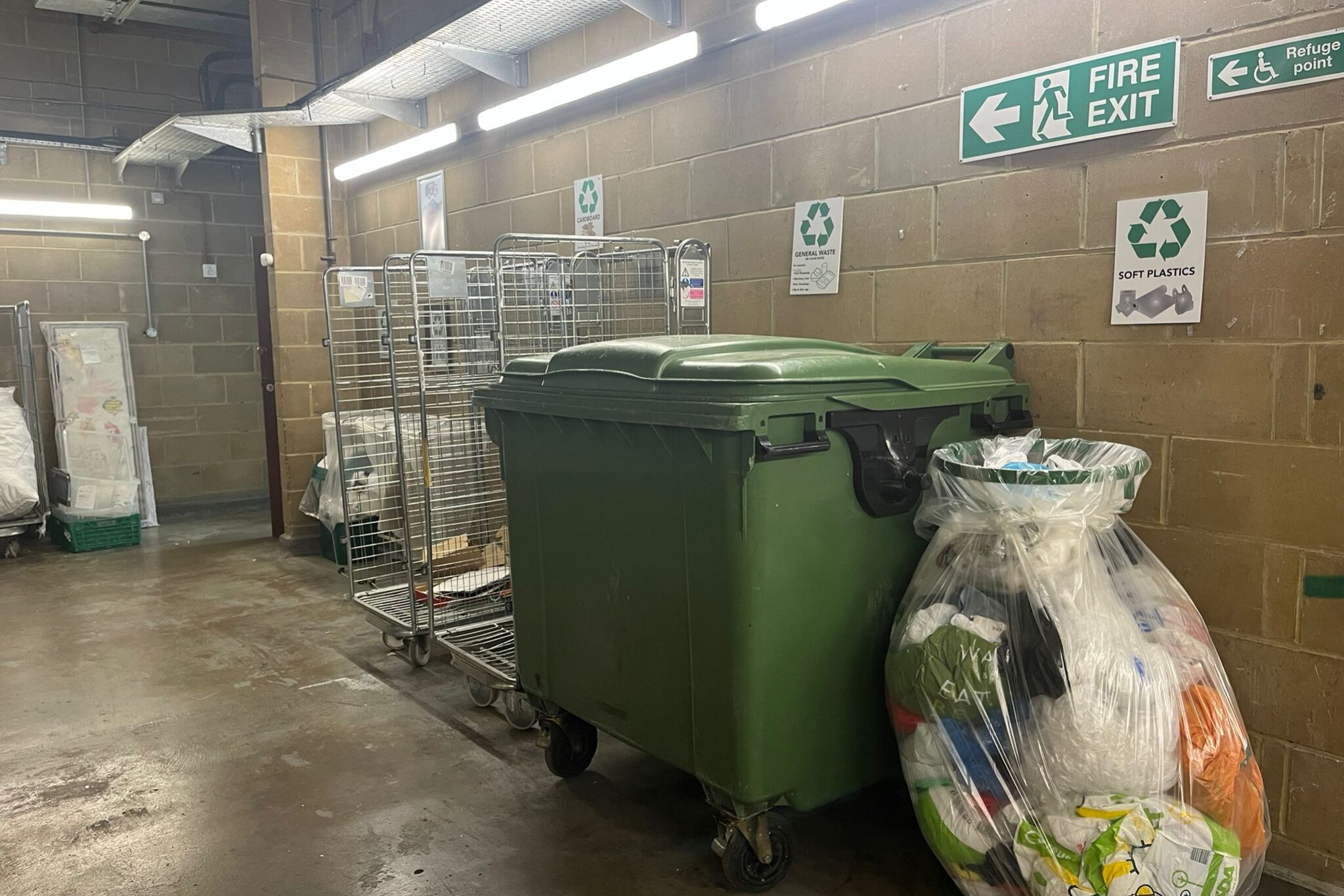
How The Belfry Shopping Centre Has Been Building a Waste-Efficient Operation Since 1999
For more than 25 years, The Belfry Shopping Centre has been steadily transforming the way it manages waste. What began in 1999 as a traditional retail waste system—where all waste was compacted and sent to landfill—has evolved into a far more sustainable and efficient operation focused on recycling, recovery and reducing environmental impact.
Today, the centre continues to work with partners, tenants and service providers to minimise landfill use and improve how materials are reused, recycled or converted into energy.
From Landfill to Resource Management
When the journey began in 1999, the waste management process was straightforward but far from environmentally friendly. Everything generated at the centre was compacted and sent directly to landfill.
Over the years, however, the management team introduced new systems and partnerships to rethink how waste is handled. The result today is a far more balanced approach:
- Around 50% of waste is recycled
- The remaining 50% is sent for energy recovery, where waste is processed to generate energy rather than being buried in landfill.
This shift has significantly reduced the environmental footprint of the centre’s operations.
Expanding Recycling Streams
One of the biggest improvements has been expanding the range of materials that can be recycled at the centre.
Today, recycling streams include:
- Food waste
- Glass
- Cardboard and paper
- Soft plastics and plastic bottles
- Metal packaging
Each material is separated and sent to specialist facilities where it can be reused or transformed into new products.
For example:
- Food waste is processed at Veolia’s Southwark facility and converted into energy.
- Glass is transported to Cory’s facility at Cringle Dock for recycling.
- General waste is sent to Viridor’s Croydon energy-from-waste facility.
- Cardboard and paper bales are taken to sorting plants and paper mills where they are pulped, cleaned and turned into new paper or packaging.
- Plastic bottles are typically recycled back into new bottles.
These systems help ensure materials are reused multiple times rather than discarded after a single use.
Recycling Uniforms and Workwear
Sustainability efforts at The Belfry extend beyond everyday waste streams. Staff uniforms and protective equipment are also part of the recycling strategy.
Through a partnership with uniform supplier SMI, used items such as:
- Boots
- Hard hats
- Hi-vis and standard garments
- Gloves
- Ear defenders
can be collected and recycled through a dedicated programme.
Between 2021 and June 2024, SMI’s Divert from Earth Scheme sold over 3,200 recycling boxes, recovering or recycling approximately 19,200 kg of products. This initiative alone helped avoid an estimated 55 tonnes of greenhouse gas emissions that would otherwise have resulted from landfill disposal.
Reducing Plastic Through Smarter Cleaning Supplies
Waste reduction also happens in the day-to-day operations of the centre’s cleaning teams.
Cleaning chemicals are now supplied in water-soluble sachets (PVA) rather than traditional bottles. This simple change has delivered two key benefits:
- Plastic bottle use has been cut by around half
- All packaging is biodegradable, reducing overall waste.
Small operational changes like this can make a significant difference when used across a large retail environment.
Working with Local Partners
Another important part of The Belfry’s sustainability approach is working closely with local businesses and service providers.
Maintenance, facilities management and operational services are often supported by nearby companies—from electrical suppliers and maintenance teams to digital and building specialists.
This local network not only supports the regional economy but can also help reduce transport emissions and improve operational efficiency.
A Continuing Sustainability Journey
The Belfry’s progress since 1999 demonstrates how long-term commitment and incremental improvements can transform waste management practices.
By expanding recycling streams, partnering with specialist waste processors, introducing innovative products such as water-soluble cleaning chemicals and ensuring items like uniforms are recycled, the centre has significantly reduced its reliance on landfill.
And the journey continues. With ongoing monitoring of waste volumes and recycling performance, The Belfry is continually looking for new ways to improve its environmental impact and move even closer to a truly circular approach to retail waste management.
1 Timeline graphic (1999–Today)
1999 – All waste compacted and sent to landfill
2000s – Recycling streams introduced
2010s – Expanded recycling (glass, plastics, cardboard)
2020s – Uniform recycling, biodegradable cleaning supplies, energy-from-waste partnerships
2 What we recycle” icon grid
A simple visual with icons for:
- Food waste
- Glass
- Cardboard & paper
- Plastic bottles
- Soft plastics
- Metal
- Uniforms & PPE
3 Retailers & Centre Operations → Waste Sorting Area →
- Food waste → Energy facility
- Glass → Recycling plant
- Cardboard & paper → Paper mills
- Plastic bottles → Bottle recycling
- General waste → Energy-from-waste facility